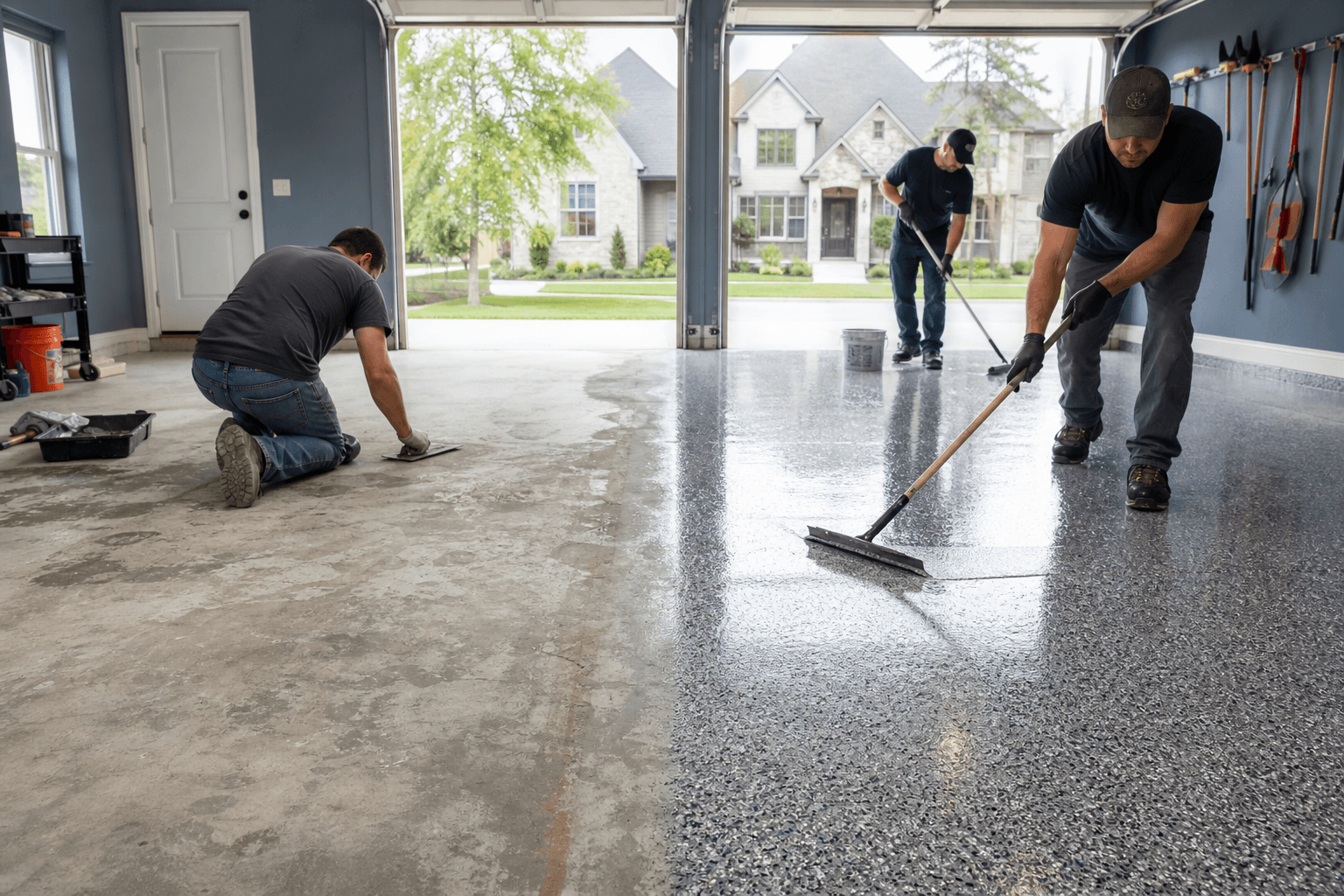
Big-box epoxy kits fail in Michigan for predictable reasons: insufficient surface prep, low solids content, and no moisture mitigation strategy. If you are researching garage floor coatings anywhere in Metro Detroit — from Oakland County to Washtenaw — understanding the difference between polyurea and epoxy is the most important decision you will make.
Every week, Reserve Coatings grinds off failed DIY epoxy in garages across Metro Detroit. The homeowners all ask the same question: "We thought epoxy was the strongest option. What went wrong?"
The answer is almost never about epoxy as a chemistry class. It is about which specific products were used, how the slab was prepared, and whether the system was engineered for Michigan's climate.
Why Michigan garage floors are harder than most
Metro Detroit garages face a combination of stressors that Sun Belt installations never see:
Freeze-thaw cycling — Concrete expands and contracts with temperature swings from -10°F to 95°F. Rigid, low-flex coatings crack and delaminate.
Hot-tire pickup — Summer heat transfers from tires to the coating surface. Cheap epoxy softens and peels in tire contact patches.
Road salt and brine — Chloride exposure from winter driving degrades coatings and the concrete beneath them.
Moisture vapor — Many Metro Detroit slabs emit vapor pressure that commodity epoxy cannot withstand.
A coating system that ignores any one of these will fail. Our specification addresses all four.

Polyurea primer: what it does differently
Polyurea is not a marketing term — it is a specific polymer chemistry with roughly four times the tensile strength and significantly more elongation than commodity epoxy.
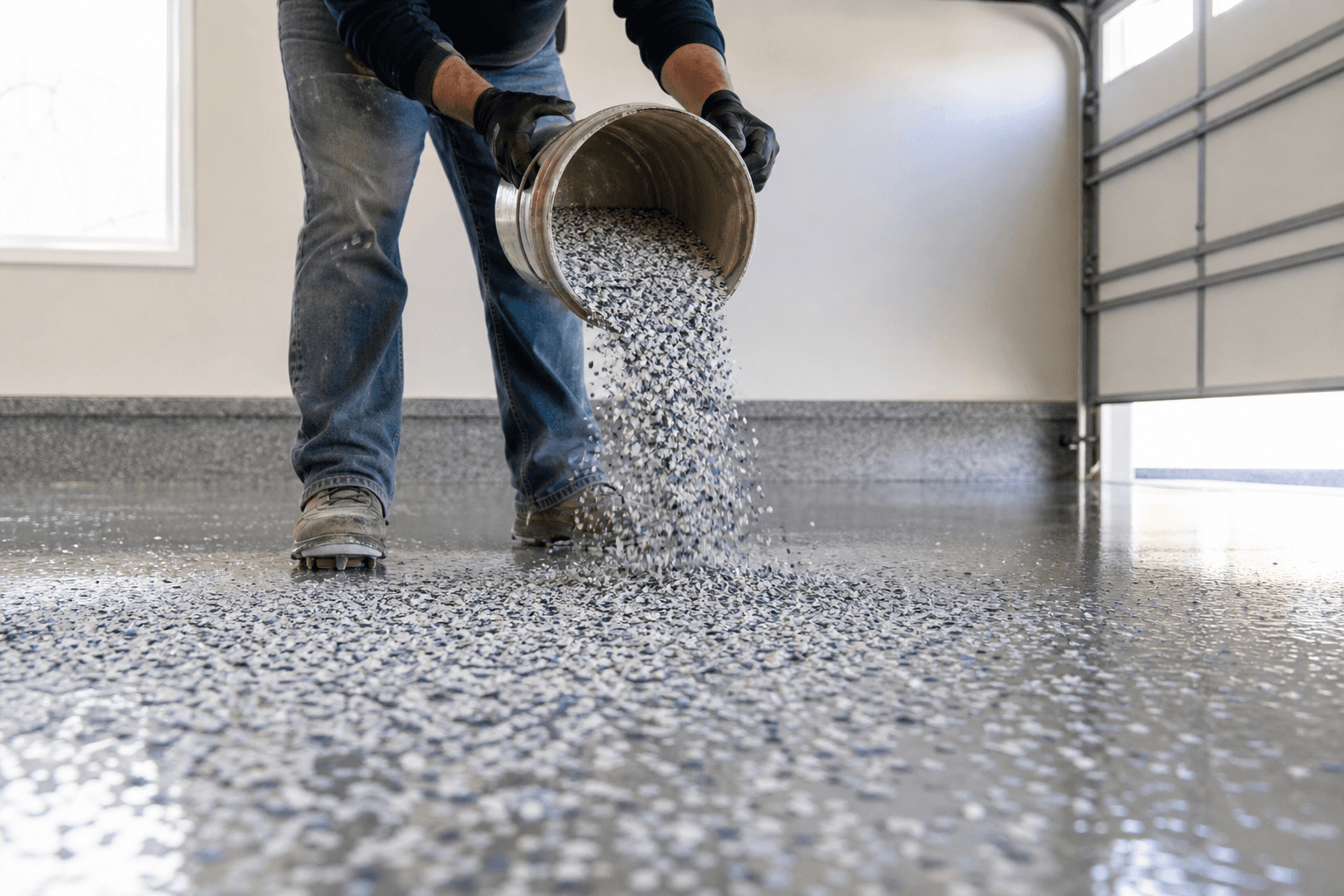
Penetration — Polyurea primer soaks into properly profiled concrete, creating both mechanical and chemical bond.
Flexibility — When the slab moves with temperature, polyurea stretches instead of cracking.
Moisture tolerance — Polyurea primers tolerate higher vapor emission than standard epoxy primers, reducing blister risk.
Speed — Fast cure times allow same-day completion of the full system.
This is why Reserve Coatings specs polyurea primer on every garage and basement project — not as an upgrade, but as the baseline.
Commodity epoxy is a fine product — in the right application, with the right prep, on the right slab. Michigan garages are rarely that application.
Polyaspartic topcoat: the surface that matters
If the primer is the foundation, the topcoat is what you live with. Polyaspartic chemistry offers:
- UV stability — Will not yellow or chalk in garages with open doors
- Chemical resistance — Handles oil, gas, road salt, and cleaning products
- Hardness — Resists hot-tire pickup that softens commodity epoxy
- Clarity — Maintains flake appearance without ambering over time
- Fast cure — Return to service in hours, not days
What big-box kits get wrong
A typical $200–$400 DIY epoxy kit includes:
- Water-based or low-solids epoxy (40–60% solids vs. 100% solids professional products)
- Etching solution instead of mechanical grinding
- No moisture testing
- No primer layer — just color coat and optional flake
- 1–3 year lifespan in Michigan conditions
The kit is not lying about being epoxy. It is simply not engineered for what your garage experiences.
The full Reserve system
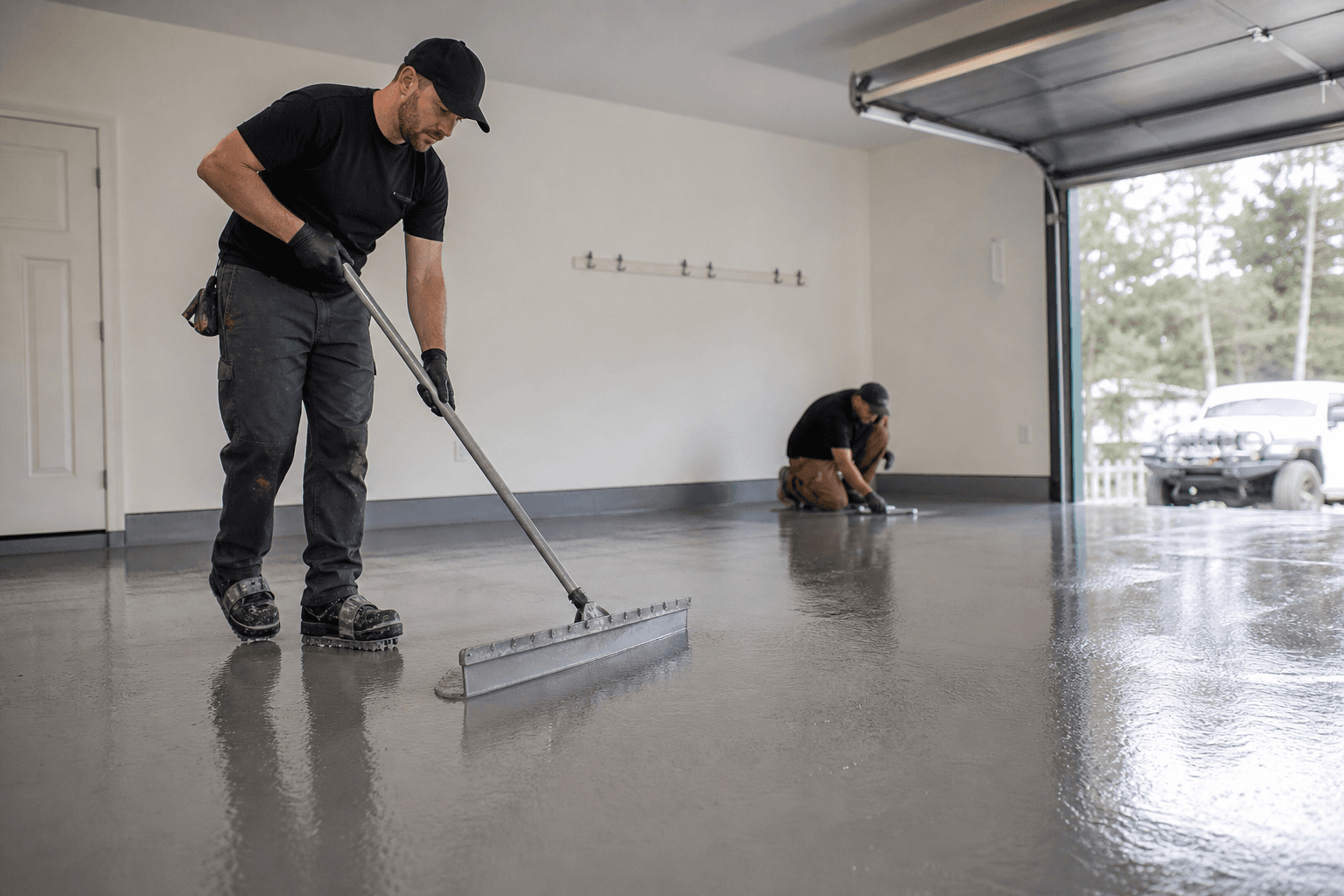
Our six-stage process stacks proven chemistry:
- Moisture testing
- Decontamination and crack repair
- Diamond grinding with HEPA extraction
- Polyurea primer application
- Full vinyl flake broadcast
- Polyaspartic topcoat
Each layer serves a purpose. Remove one — especially prep or primer — and the system fails.
What to ask any coating contractor
- What primer do you use, and what is its moisture tolerance?
- Do you diamond grind or acid etch?
- Who performs the install — employees or subcontractors?
- What is the warranty, and is it transferable?
- Can I see completed projects in my area?
Frequently asked questions
Is polyurea more expensive than epoxy?
Professional polyurea systems cost more than DIY kits but are comparable to professional epoxy installs. The difference is lifespan — decades vs. years.
Can polyurea be applied over existing epoxy?
Sometimes, if the existing coating is well-bonded and properly profiled. We assess every floor individually during the walk-through.
How long does a polyurea garage floor last?
With professional installation, expect 20+ years of performance. Reserve Coatings provides a transferable lifetime warranty.
Get your instant estimate
Square footage, finish tier, and optional photos — a real range in about a minute.
TRY THE QUOTE TOOL