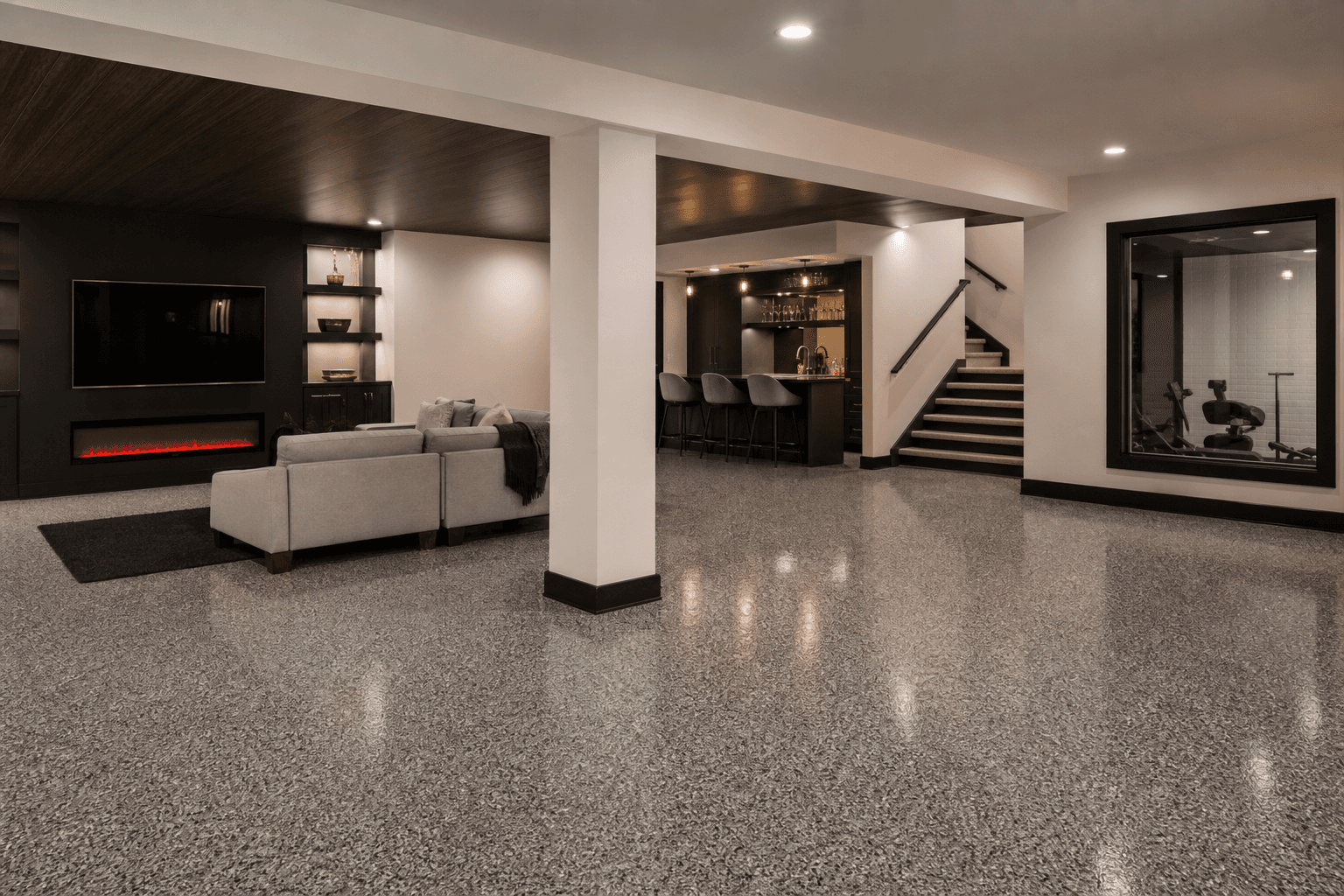
Birmingham homeowners know their basements are different. Mature tree canopy, established neighborhoods on clay soils, and water tables that shift with the seasons all push moisture vapor upward through basement slabs — often invisibly, until a coating fails.
If you are considering a basement floor coating in Birmingham or anywhere in Oakland County's established communities, moisture testing is not a sales tactic. It is the single most important diagnostic step in specifying a system that lasts.
Why Birmingham basements have unique moisture challenges
Birmingham sits on glacial till and clay-heavy soils common across southeastern Oakland County. These soils hold water and release it slowly, creating sustained vapor pressure against the underside of basement slabs. Older homes — and Birmingham has many — may also have minimal or degraded underslab vapor barriers.
The result: concrete that looks dry on the surface can emit significant moisture vapor. Industry standards measure this as Moisture Vapor Emission Rate (MVER) in pounds per 1,000 square feet over 24 hours. Coating manufacturers specify maximum acceptable rates. Exceed them, and even premium epoxy will blister and delaminate within months.

What moisture testing actually involves
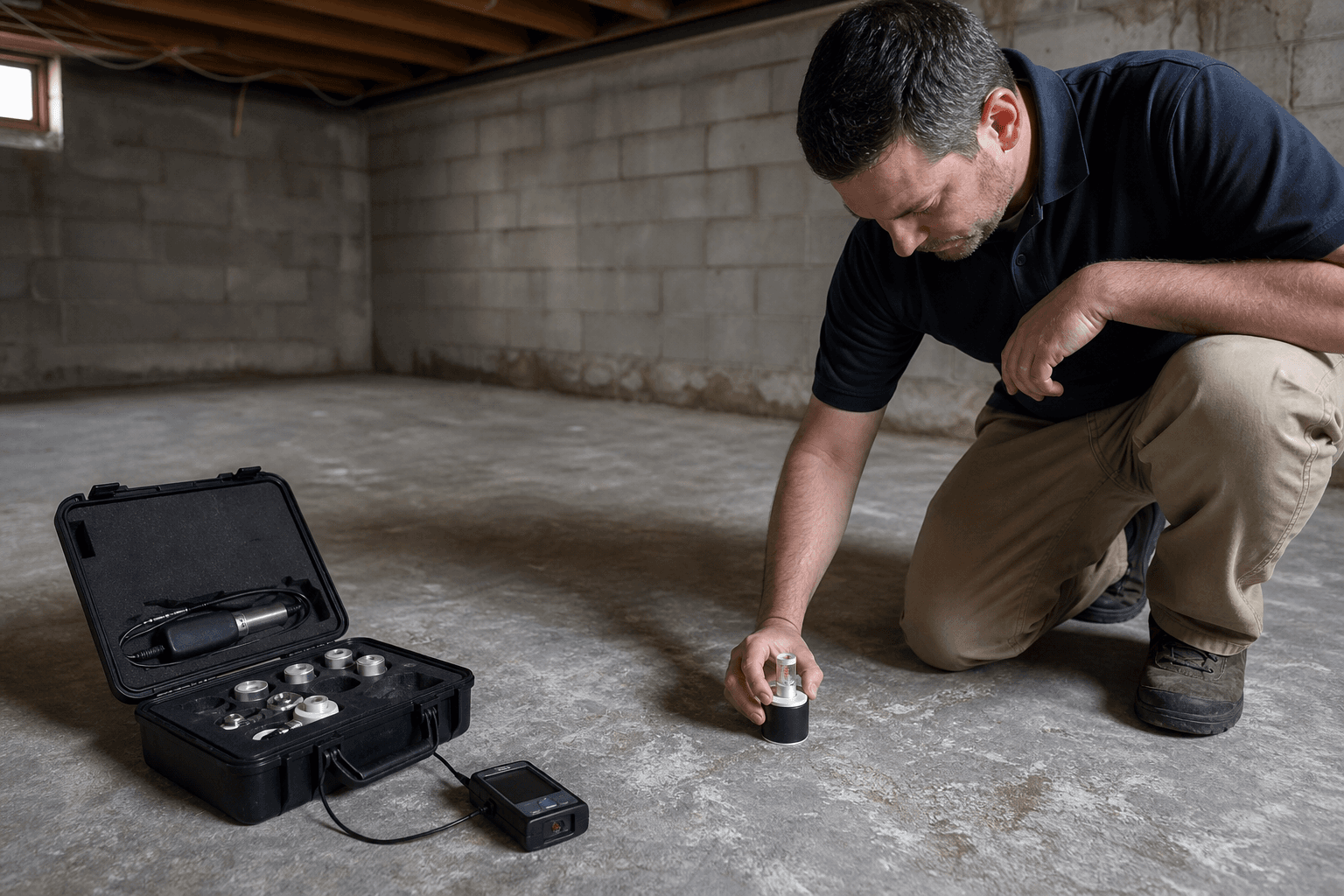
Before any Reserve Coatings basement project in Birmingham, we perform quantitative moisture testing — not a visual guess, not a "feels dry" assessment.
Calcium chloride test (ASTM F1869) — Measures MVER at the slab surface over 72 hours. Results tell us whether standard primer is appropriate or whether a moisture-mitigating system is required.
In-situ relative humidity (ASTM F2170) — Probes placed inside the slab measure internal RH, which correlates directly with coating adhesion risk.
These tests take time, but they prevent the most expensive failure mode in basement coatings: applying a beautiful flake floor that peels up six months later because vapor pressure exceeded what the system could handle.
Skipping moisture testing to save a day on the schedule is how basement epoxy projects fail. We test every Birmingham slab before we spec a system.
Specifying the right system for your moisture profile
Test results fall into three general zones:
Low vapor emission — Standard polyurea primer with full flake broadcast and polyaspartic topcoat. This covers many Birmingham basements that have been climate-controlled for years.
Moderate vapor emission — Enhanced primer systems with higher moisture tolerance. May include epoxy moisture barriers before the decorative layers.
High vapor emission — Dedicated moisture mitigation products (simiron-style MVB systems) applied before any decorative coating. Non-negotiable if you want the floor to last.
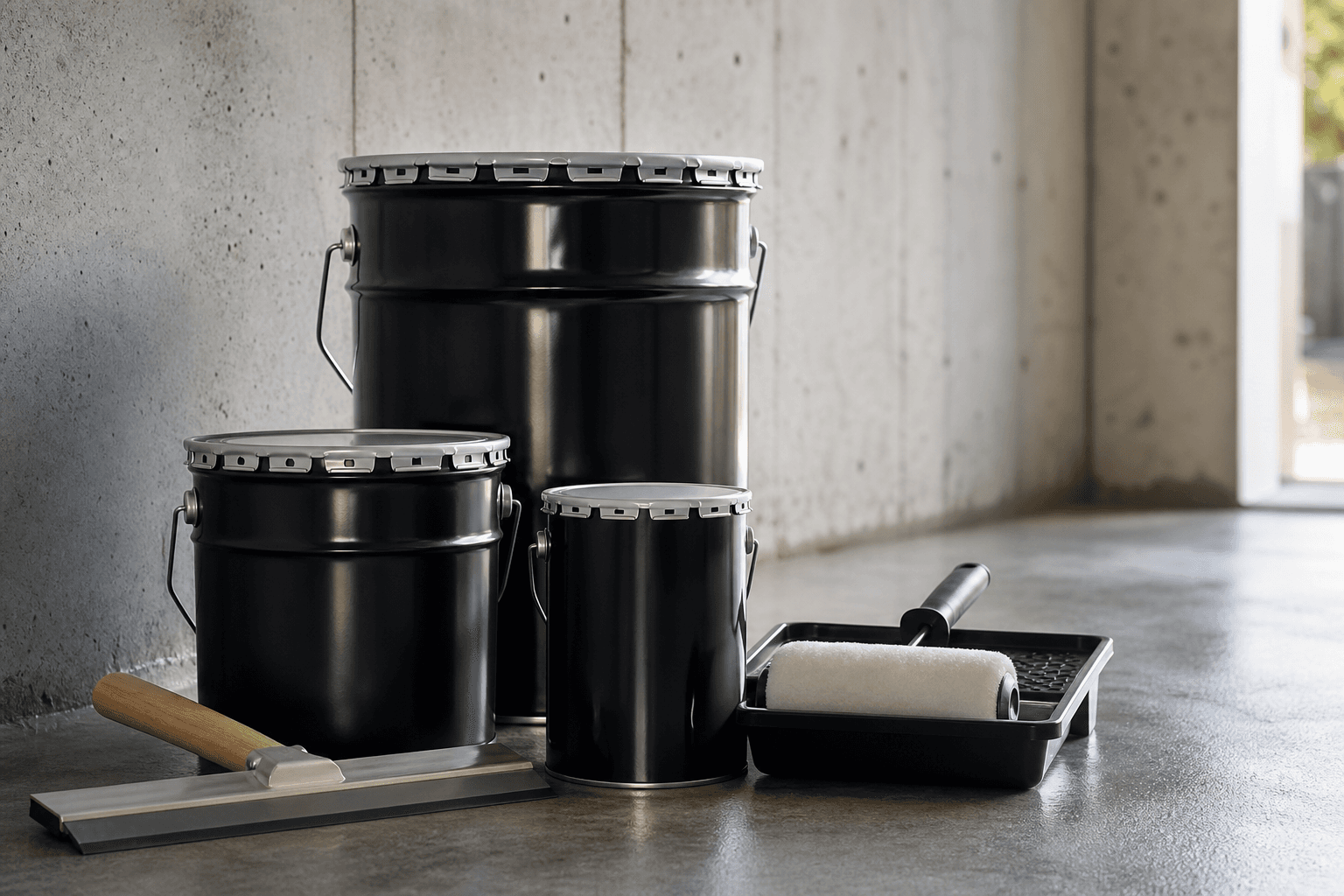
Basement coating vs. other flooring options
Birmingham homeowners finishing basements for family rooms, home offices, and gyms often compare epoxy flake to LVP, carpet, and tile. Here is how epoxy compares for below-grade spaces:
- Seamless surface — No grout lines or seams where moisture can collect
- Chemical resistance — Handles spills, cleaning products, and humidity without swelling
- Easy maintenance — Dust mops and occasional damp mopping; no waxing
- Moisture compatibility — When properly specified, performs where organic flooring fails
What to ask any basement coating contractor
- Do you moisture test every slab, and which ASTM methods do you use?
- What is your remediation plan if MVER exceeds your primer's rating?
- Are your installers employees or subcontractors?
- What does the warranty cover if moisture-related delamination occurs?
Reserve Coatings answers all of these before a single gallon is mixed. Learn more about our installation process.
Frequently asked questions
How much moisture is too much for basement epoxy?
Most decorative epoxy systems require MVER below 3–4 lbs per 1,000 sq ft per 24 hours. Higher readings require moisture-mitigating primers designed for the specific emission rate.
Can you install basement epoxy in a damp Birmingham basement?
Yes — if the moisture source is vapor emission through the slab and the correct mitigation system is specified. Active water intrusion (leaking walls or floor cracks with flowing water) must be resolved first.
How long does basement floor coating take?
Most Birmingham basement projects are completed in one day, with furniture back the next morning. Moisture testing adds a few days before install day.
Get your instant estimate for a Birmingham basement floor →
Get your instant estimate
Square footage, finish tier, and optional photos — a real range in about a minute.
TRY THE QUOTE TOOL